Gooseneck Implement Fields New Program to Train Techs
By: Luann Dart, Grant County News
With 47 service technician positions to fill across all its dealerships, Gooseneck Implement has implemented JDTECH programs, allowing technicians to train either on campus at North Dakota State College of Science (NDSCS) or remotely from a local dealership.
Current employees who want to further their career, those wanting to start a new career or high school graduates can enter either program, and be guaranteed a job upon completion of the degree.
“It’s really a program that can be attended by anybody if they have the desire to work for a good company and if they want to help customers,” says Stewart Opland, the training and technology manager with Gooseneck Implement.
Both virtual classes and on-campus classes begin in the fall. Apply on the Gooseneck Implement website under “careers,” obtain a sponsorship from one of the 13 dealerships, including in Elgin, and complete the college application.
The dealerships, including in Elgin, are continually seeking service technicians.
“We would take as many as we can get,” Opland says. Gooseneck Implement has 153 technicians across its 13 locations, with a goal to have 200 working.
Remote classes
Through the two-year JDTECH Virtual Program, Gooseneck Implement has partnered with Arkansas State University-Beebe to offer an accredited JDTECH degree remotely from any of its 13 locations.
“It’s unique to Gooseneck. It’s the first program in the world that is strictly John Deere and strictly virtual,” Opland says. “In the coming years, you will probably see it available to other John Deere dealerships around the U.S.”
Five students will be the inaugural graduates from the program in May, and 10 first-year students are enrolled.
Students earn a two-year associate degree from ASU-Beebe, combining onsite learning with paid full-time, on-the-job work experience. Students who are accepted into the program are hired as a full-time employee, where they work 40 hours a week.
“The beauty of this program is that they work full time. So, they work four 10-hour days, then the virtual training happens with the instructors from Beebe on either Fridays or Mondays,” Opland says. Lab activities are completed during their work time with a mentor at the dealership.
“It’s very much hands-on,” he says, and trainees are paid $25 an hour.
A facility in Williston offers lab training as well, with an adjunct instructor who is a full-time Gooseneck employee.
The sponsoring dealership then hires the employee as a technician when the training is completed. Gooseneck also offers full tuition reimbursement.
“So, whatever costs they incurred as far as tuition goes, we repay that through their paycheck over the course of four years,” Opland says. “They will come out of it pretty much debt-free.”
Trainees attend virtual classes at the dealerships where they are working, but all the students in the class are online at the same time. They also gather for in-field training on equipment, such as combines and air seeders.
“They’re getting the training on the basic side from the college, but then we can really accelerate their training by doing some different things like in-field training as well as working with some seasoned technicians in the stores,” Opland says.
“We wanted to start it in-house, because we saw a lot of promising candidates who really can’t afford to go to a two-year school. They have other commitments, like family or maybe they work part time on the farm. They can’t go to a traditional college program. And we just felt like there was no way to get those people the degree they wanted going the traditional route,” he says. “We need to have our own program. We need to build our own technicians and have them work while they’re getting their degree. We have some older-than-average students. We have some students who have families and it’s allowed them to pursue a degree that otherwise they wouldn’t be able to.”
“We have 47 positions to fill. Starting in the fall of 2023, our goal is to have 20 incoming students for this program,” he says.
NDSCS program
Gooseneck Implement also partners with NDSCS in Wahpeton in the JDTECH Program, also providing tuition reimbursement and guaranteed job placement after graduation.
Through the more traditional program, students attend college on campus in Wahpeton to earn their two-year associate degree.
Four students will graduate in May from the NDSCS program.
Students can apply to attend the NDSCS JDTECH Program by first completing the Gooseneck Implement application, then the NDSCS general application.
“That program has been very successful as well,” Opland says. “It’s really nice to be able to have both programs, because we can facilitate whatever the student or the person wants.”
Upon graduation, the technicians start their career at their sponsoring dealership, and tuition is also reimbursed over four years.
The NDSCS program is open to any John Deere dealerships, says Opland, who graduated from the first NDSCS John Deere TECH program in 1991.
Deere & Company established the John Deere TECH program in 1989 and now sponsors programs at 24 colleges throughout the United States and Canada.
“That program has been really good,” he says.
From NDSCS, students also complete a paid internship at the local dealership during the school year.
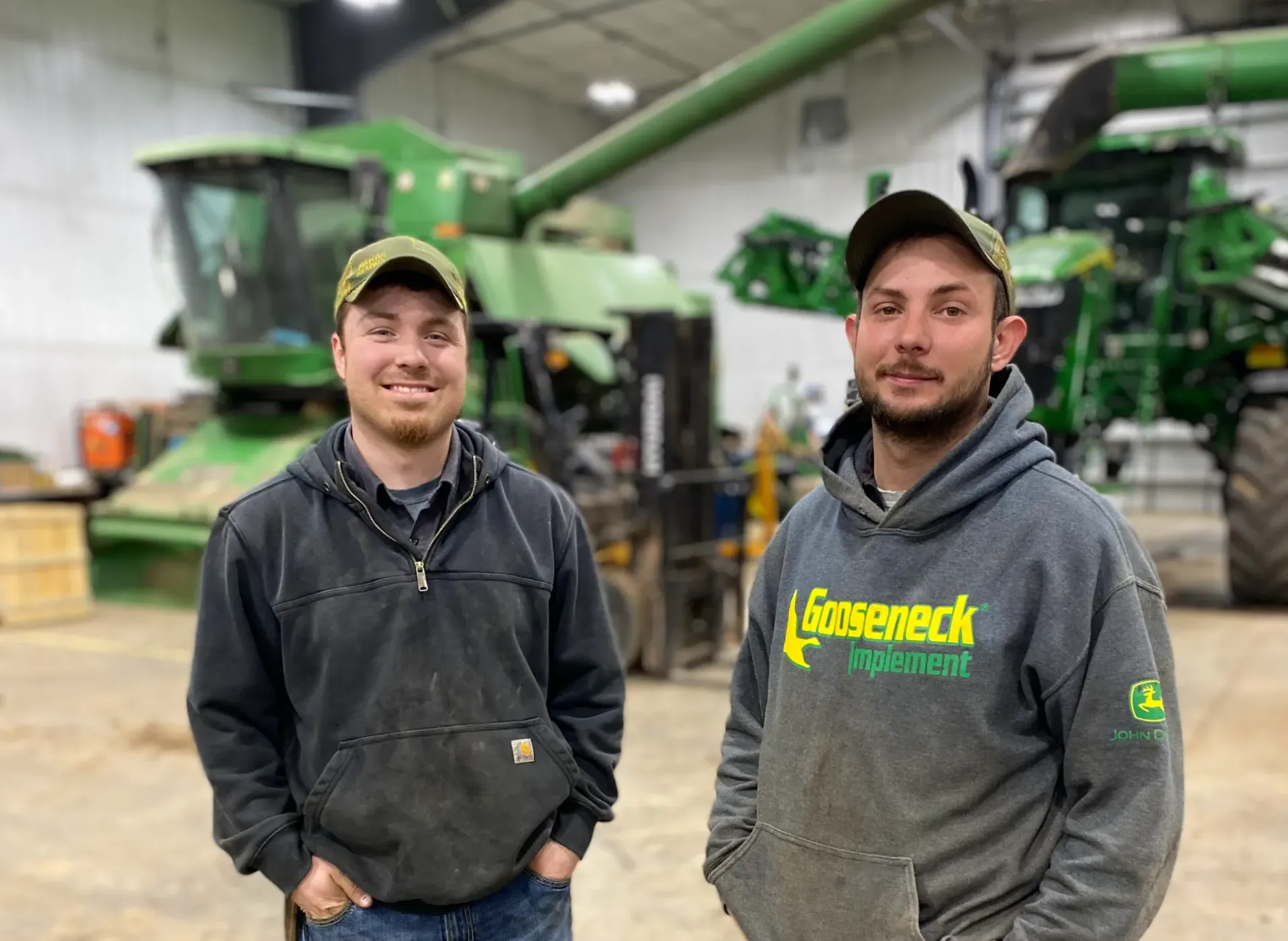
Two local service technicians, Kristian Roth and Rob Friesz, both graduated from the NDSCS program. Roth graduated from Hazen High School in 2019, then worked at Elgin’s dealership before attending NDSCS, graduating last May.
Friesz started working for the previous Elgin dealership, Dakota Farm, in 2012 while still in high school, graduating from NDSCS in 2015 and is now a lead field service technician.
“Growing up, I always liked wrenching and hearing things run. So, I just wanted to pursue it. I like tinkering on things,” Roth says.
“The stability of the job in this area, because I really didn’t have intentions of leaving, it was best suited for me to pursue. The heart of the farm and ranch, plus mechanics all in one, is what I like,” Friesz says.
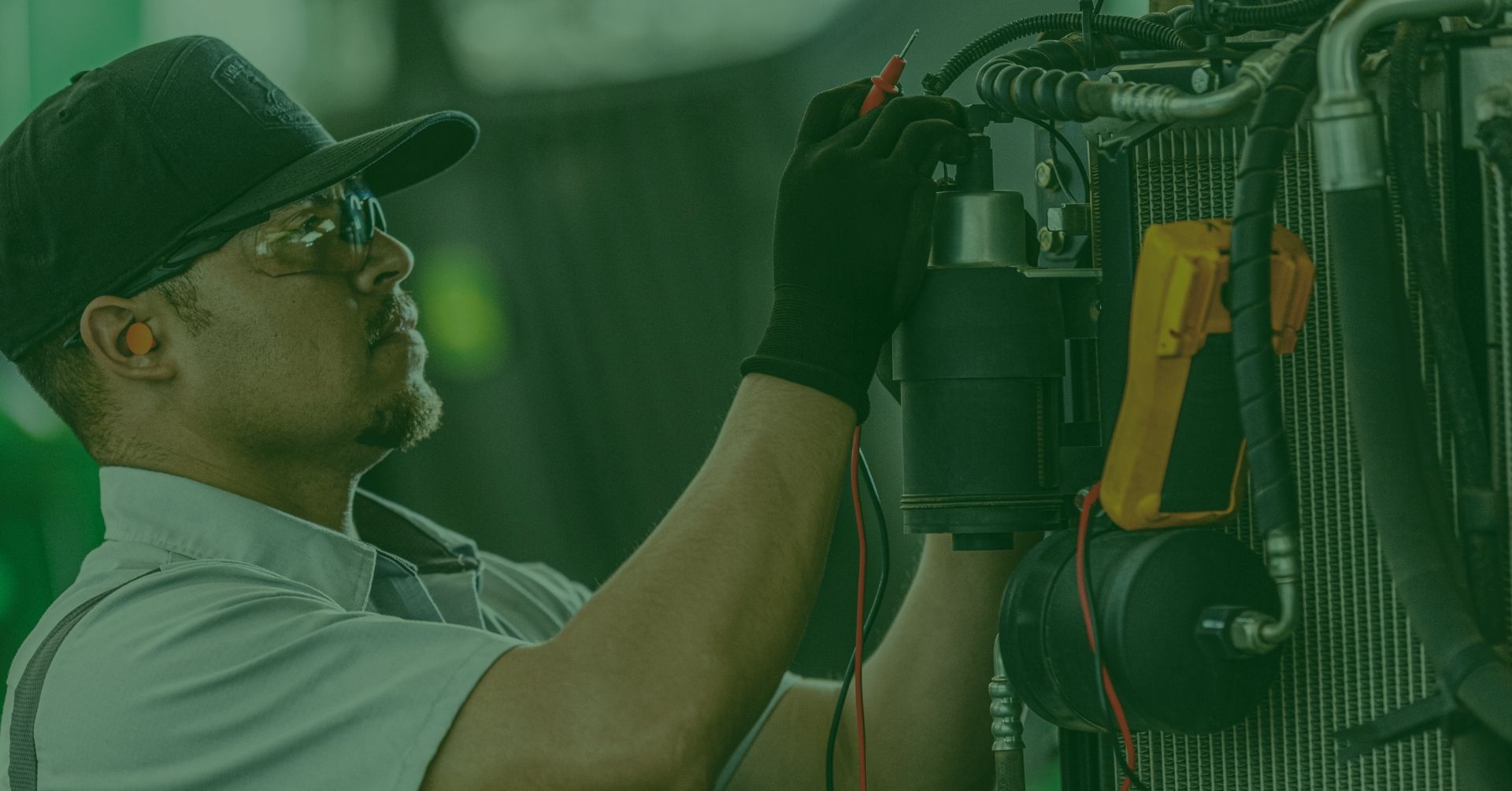
Service techs set up new equipment for a customer, add attachments, and do everything from basic engine oil changes to diagnostics and repair of the machine, as well as diagnosing and repairing equipment in the field, with customer interaction and public relations involved, Friesz describes.
“It’s definitely better than going into general diesel or automotive or something like that, just because you’re coming back doing an internship and using the knowledge that you learned,” Friesz says.
“That’s just the beginning of their training, because we’re all about training for all of our people, whether they be a technician or a parts person or a sales person. So, once they graduate from school, we have two full-time trainers who do update training on new equipment and technology for existing technicians and existing sales people and existing parts people. Training is a huge thing for us, because things change so fast,” Opland says.
To learn more about the Virtual JDTECH Program: http://www.gooseneckimp.com/virtualjdtech
To learn more about the On-Campus JDTECH Program:
https://www.gooseneckimp.com/jdtechprogram